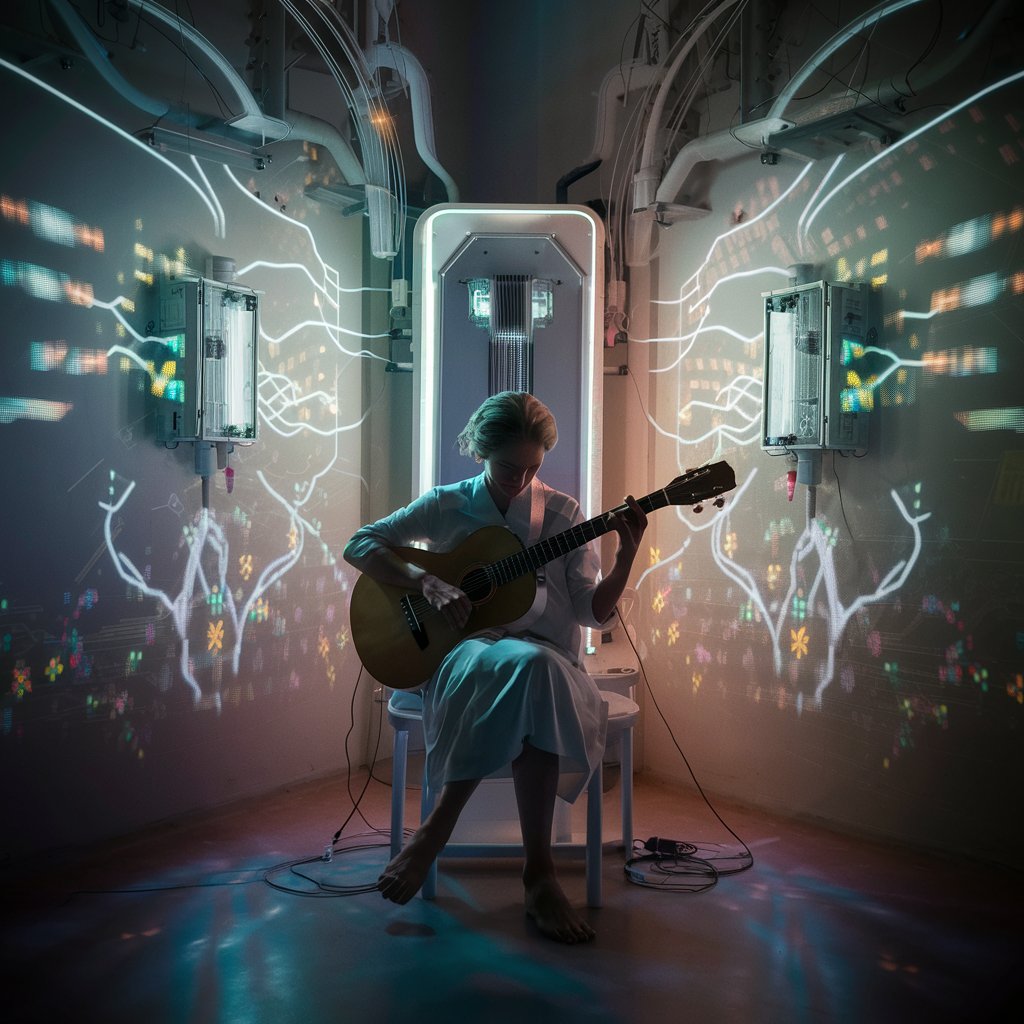
Music therapy as a clinical practice depends on the therapist’s ability to provide musically responsive interventions. The music needs to match the client’s state, then guide it. That responsiveness traditionally required the therapist to be a skilled musician — capable of improvising, adjusting, and directing music in real time.
The requirement has limited who can deliver music therapy effectively. AI generation tools are changing that constraint.
What Is the Role of Music in Therapeutic Contexts?
Music functions in therapy through several mechanisms. It regulates physiological arousal — tempo and energy level influence heart rate and breathing patterns. It provides a non-verbal communication channel for clients who struggle with verbal expression. It creates a shared emotional experience between therapist and client that facilitates connection and trust.
Each of these mechanisms requires music that is appropriately matched to the therapeutic context. The wrong music at the wrong moment is not neutral — it can disrupt the therapeutic relationship or contradict the therapeutic goal.
The Skill Barrier for Non-Musician Therapists
Music therapy certifications exist precisely because effective music therapy requires both clinical training and musical competence. But the intersection of qualified clinicians with strong musical performance skills is a small population. Many therapists who could benefit from music-based interventions lack the confidence to execute them.
AI generation tools lower the technical barrier without lowering the clinical bar.
How Does an AI Song Generator Support Clinical Practice?
An ai song generator that generates mood and tempo-specific music gives the clinician an instrument they can direct without performing. A session that calls for grounding music — slow tempo, minimal instrumentation, low frequency emphasis — can be generated and adjusted quickly based on client response.
The therapist’s clinical judgment directs the music’s function. The AI executes it. The combination restores the therapeutic responsiveness that improvisation would otherwise require.
Specific Therapeutic Applications
Anxiety and stress reduction. Generate slow-tempo, low-frequency, harmonically simple music that supports parasympathetic nervous system activation. Adjust tempo and dynamic range based on session progress.
Mood elevation. Incrementally increasing tempo and energy as the session progresses mirrors the rhythmic entrainment techniques that live music therapists use to shift client emotional state.
Expressive work. High-intensity music that provides a container for strong emotional expression — particularly for clients who need permission to feel and externalize difficult emotions. An ai music generator with broad dynamic and emotional range supports this work.
Memory and reminiscence work. Generation of music in specific styles from a client’s developmental era supports memory access for dementia and trauma-oriented clinical applications.
Can Therapists Generate Session Music Without Production Background?
Therapists who want to generate session-specific music don’t need production knowledge. The generation brief doesn’t require understanding of audio engineering — it requires clinical knowledge translated into musical parameters. Tempo, instrumentation, energy level, emotional direction: these are clinical decisions that translate directly into generation inputs.
What Are the Benefits of Documentation and Reproducibility?
When a specific generated piece of music produces a positive clinical response, the generation parameters serve as documentation. Reproducible music for clients who benefit from consistent conditions — particularly for autism spectrum interventions and trauma-informed care — is clinically valuable.
Frequently Asked Questions
What Is the Role of Music in Therapeutic Contexts?
Music functions in therapy through several mechanisms. Each of these mechanisms requires music that is appropriately matched to the therapeutic context.
How Does an AI Song Generator Support Clinical Practice?
An ai song generator that generates mood and tempo-specific music gives the clinician an instrument they can direct without performing. The therapist’s clinical judgment directs the music’s function.
Can Therapists Generate Session Music Without Production Background?
Therapists who want to generate session-specific music don’t need production knowledge. The generation brief doesn’t require understanding of audio engineering — it requires clinical knowledge translated into musical parameters.
What Are the Benefits of Documentation and Reproducibility?
When a specific generated piece of music produces a positive clinical response, the generation parameters serve as documentation. Reproducible music for clients who benefit from consistent conditions — particularly for autism spectrum interventions and trauma-informed care — is clinically valuable.
What Is the Clinical Opportunity?
Expanding the range of clinicians who can deliver music-based interventions expands access to a therapeutic modality with strong evidence of effectiveness. AI generation is not replacing the skilled music therapist — it’s making responsive music possible for clinicians whose value lies in their clinical expertise, not their instrument performance.
